In Judaism there is a practice of taking a small roll of parchment and placing it inside a container and affixing it to doorposts. They parchment and container are called mezuzot and the practice comes an instruction found in the book of Deuteronomy in the Bible which reads, “You shall love the Lord your God with all your heart and with all your soul and with all your might. These words which I am commanding you today shall be on your heart…You shall write them on the doorposts of your house and on your gates.”
According to author Lauren Winner in her book, Mudhouse Sabbath, “these are the boxes you see on the doors outside Jewish houses. You’ll find them inside, too, on the doorposts to any room in which people live.”
There are many reasons for hanging mezuzot, not the least of course being because it is a commandment. However, these doorpost offerings also serve as markers of heritage and history, a reminder of who one is, from where one comes, and what is deeply valued, clung to, depended upon. You walk in and you walk out and you remember exactly what your life is supposed to be about.
On Valentine’s Day this year I bought my husband a small wooden sign that reads, “Life is good.” It happens to be something he says a lot and I like the sentiment. It’s short, simple, and gets right to the heart of what we both ultimately desire to hold true. It was a great find and deeply appreciated by him.
Without my knowledge of his plans, he chose to hang the sign on the inside of an eave facing the front door, visible when you walk out. When we depart our hallowed halls of home, our sanctuary and safety net, and move out into the world that may or may not abide by the sign’s saying, it is the last message we read and this small sign brings me a measure of confidence.
It has become important to me, this little talisman of hope. It may not be as dire as a piece of paper with ancient holy words rolled into a sacred holder and nailed to a doorpost, a commandment to obey and a tradition long honored; but it steadies me in a way before heading out into the world. It is my mantra, grounding me, centering me as I leave what I have created and ordered and enter into that which is ordered and created by others.
Life is good. Simple. Truthful. The value I wish to uphold as I come and go, as I leave and return. Believing this, honoring this, trusting this, it is how I want to begin and end every day.
Wednesday, May 4, 2011

Thursday, February 10, 2011
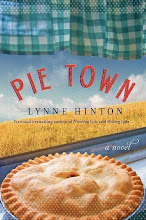
Finding Pie Town
Finding Pie Town
About fifteen years ago when we were dreaming of moving to New Mexico from North Carolina, my husband and I were traveling through the southwestern part of the United States. Along one of our travels, from Albuquerque to Phoenix, we stopped in a little settlement known as Pie Town. I remember thinking what a quaint and funny name of a town. As we drove through Pie Town, we noticed a small restaurant and decided to stop and, with a name like Pie Town, have some pie. Imagine our surprise when we are told there is no pie. “No pie in Pie Town?” I thought and that notion stayed with me.
People have often asked how I get an idea for a story, what interests me, how do I start. And the answer is something like the situation of finding no pie in Pie Town. I began to think about how often names of places or ascribed roles for people lend others to make assumptions. We assume a small town will be welcoming and easy for newcomers to integrate. We assume a church will be a safe place, a loving and warm place. We assume mothers will be present for their children and children won’t die. Once you think about it, life is rarely what we expect. People behave in ways we never could have guessed and life is certainly full of surprises.
Having served as a pastor of several churches, I am often intrigued by what church members think about themselves. Most people in church will proudly announce about themselves that they are a “loving” place, a “welcoming and hospitable” place. And yet, in my experience, this is not always the case. Yes, churches can be quite welcoming and hospitable to the longtime members, the families that are connected to the area, the children who grew up in the church. But for newcomers, churches can often feel alienating and cold. As communities, as churches, as towns, as people, we are often not what we appear and we are not always as good as we think we are. It was this notion of irony that interested me when I began this story.
Now, many years after my first visit to Pie Town, I have discovered that there is a place that serves pie. The Pie-O-Neer Café has been open for more than ten years and has become quite successful. The owner, Kathy Knapp has found a great place for herself in Pie Town and I’m happy to include a recipe from the Pie-O-Neer with a few other regional recipes at the end of the book. I hope you will enjoy! And if you’re in the neighborhood of Pie Town, New Mexico, please stop by and have a slice. Tell them I sent you!
About fifteen years ago when we were dreaming of moving to New Mexico from North Carolina, my husband and I were traveling through the southwestern part of the United States. Along one of our travels, from Albuquerque to Phoenix, we stopped in a little settlement known as Pie Town. I remember thinking what a quaint and funny name of a town. As we drove through Pie Town, we noticed a small restaurant and decided to stop and, with a name like Pie Town, have some pie. Imagine our surprise when we are told there is no pie. “No pie in Pie Town?” I thought and that notion stayed with me.
People have often asked how I get an idea for a story, what interests me, how do I start. And the answer is something like the situation of finding no pie in Pie Town. I began to think about how often names of places or ascribed roles for people lend others to make assumptions. We assume a small town will be welcoming and easy for newcomers to integrate. We assume a church will be a safe place, a loving and warm place. We assume mothers will be present for their children and children won’t die. Once you think about it, life is rarely what we expect. People behave in ways we never could have guessed and life is certainly full of surprises.
Having served as a pastor of several churches, I am often intrigued by what church members think about themselves. Most people in church will proudly announce about themselves that they are a “loving” place, a “welcoming and hospitable” place. And yet, in my experience, this is not always the case. Yes, churches can be quite welcoming and hospitable to the longtime members, the families that are connected to the area, the children who grew up in the church. But for newcomers, churches can often feel alienating and cold. As communities, as churches, as towns, as people, we are often not what we appear and we are not always as good as we think we are. It was this notion of irony that interested me when I began this story.
Now, many years after my first visit to Pie Town, I have discovered that there is a place that serves pie. The Pie-O-Neer Café has been open for more than ten years and has become quite successful. The owner, Kathy Knapp has found a great place for herself in Pie Town and I’m happy to include a recipe from the Pie-O-Neer with a few other regional recipes at the end of the book. I hope you will enjoy! And if you’re in the neighborhood of Pie Town, New Mexico, please stop by and have a slice. Tell them I sent you!
Month of Love, February
The Month of Love
This is the month in which we celebrate Valentine’s Day, the day honoring romantic love, and subsequently, happens to be a month in which there are a lot of weddings and proposals for marriage. This past weekend I was with a young couple planning their sacred event and we were talking about the vows. They were trying to decide whether to use traditional ones or write their own and they asked me what words I thought were important to say and if there was a wedding that I remembered because of the vows. I immediately thought of one from my first parish.
Ronny and Peggy were in their early twenties when I met them. Members of the local community, they dropped by the church where I served to ask about having their wedding there. I explained to them that non-members of the church who wanted to use the building for their wedding were asked to attend church a couple of times, to get to know the folks in church and to allow the church folks to get to know them. They attended worship a few Sundays and discovered that they liked the community and decided to join.
Not long after first meeting the couple, Ronny was diagnosed with melanoma that had spread to his liver and lungs. He started aggressive treatments and the wedding was postponed. It became clear soon after the treatments began that his prognosis was not good and the three of us had many conversations about whether or not marriage was the best option for them. After a few months when they were given a terminal diagnosis, the cancer having spread to Ronny’s brain, they both came to me with the prayerful and clear desire to go forward with their wedding.
It was decided to have the ceremony during the church service on a Sunday morning. This was the day when the entire community was gathered for worship and became a wedding service in which we all made a promise to love and care and stand with each other from that day forward. There were love songs sung by the choir and the congregation; and my sermon was based on a psalm that begins, “Though I walk in the midst of trouble,” and goes on to say, “I will trust in God’s steadfast love.” We talked about choosing to walk together even if the path is laden with trouble and difficulty and as the couple made promises to walk together, the congregation made them as well. There were tears of joy and sorrow and I will never forget the intimate and deep connection I felt with the couple and with the gathered community. I felt as if the wedding was completely about love and that the church was really being church. Promises were made in truthfulness and as I came to see, were kept. It wasn’t too many months later that Ronny died, his wife at his side, his church family close by.
As I shared this story with the young couple planning their ceremony, I saw their surprise and sadness. It probably wasn’t the wedding story about meaningful vows that they were hoping to hear; but it is the one that I will never forget.
This month as we celebrate romantic love at Valentine’s Day and at the weddings we’ll attend perhaps we have offered to us the chance to be mindful of the kind of love that goes a little deeper than romance and involves a little more than just saying some words. For surely, to promise love takes more than just two people and more than just repeating something written on a piece of paper. Real love, like a memorable wedding, pushes us to promise our care, concern, and presence to each other even as we walk in the midst of trouble. Because if we can’t walk that walk, then even if the words are poignant and beautiful, we really shouldn’t talk the talk.
This is the month in which we celebrate Valentine’s Day, the day honoring romantic love, and subsequently, happens to be a month in which there are a lot of weddings and proposals for marriage. This past weekend I was with a young couple planning their sacred event and we were talking about the vows. They were trying to decide whether to use traditional ones or write their own and they asked me what words I thought were important to say and if there was a wedding that I remembered because of the vows. I immediately thought of one from my first parish.
Ronny and Peggy were in their early twenties when I met them. Members of the local community, they dropped by the church where I served to ask about having their wedding there. I explained to them that non-members of the church who wanted to use the building for their wedding were asked to attend church a couple of times, to get to know the folks in church and to allow the church folks to get to know them. They attended worship a few Sundays and discovered that they liked the community and decided to join.
Not long after first meeting the couple, Ronny was diagnosed with melanoma that had spread to his liver and lungs. He started aggressive treatments and the wedding was postponed. It became clear soon after the treatments began that his prognosis was not good and the three of us had many conversations about whether or not marriage was the best option for them. After a few months when they were given a terminal diagnosis, the cancer having spread to Ronny’s brain, they both came to me with the prayerful and clear desire to go forward with their wedding.
It was decided to have the ceremony during the church service on a Sunday morning. This was the day when the entire community was gathered for worship and became a wedding service in which we all made a promise to love and care and stand with each other from that day forward. There were love songs sung by the choir and the congregation; and my sermon was based on a psalm that begins, “Though I walk in the midst of trouble,” and goes on to say, “I will trust in God’s steadfast love.” We talked about choosing to walk together even if the path is laden with trouble and difficulty and as the couple made promises to walk together, the congregation made them as well. There were tears of joy and sorrow and I will never forget the intimate and deep connection I felt with the couple and with the gathered community. I felt as if the wedding was completely about love and that the church was really being church. Promises were made in truthfulness and as I came to see, were kept. It wasn’t too many months later that Ronny died, his wife at his side, his church family close by.
As I shared this story with the young couple planning their ceremony, I saw their surprise and sadness. It probably wasn’t the wedding story about meaningful vows that they were hoping to hear; but it is the one that I will never forget.
This month as we celebrate romantic love at Valentine’s Day and at the weddings we’ll attend perhaps we have offered to us the chance to be mindful of the kind of love that goes a little deeper than romance and involves a little more than just saying some words. For surely, to promise love takes more than just two people and more than just repeating something written on a piece of paper. Real love, like a memorable wedding, pushes us to promise our care, concern, and presence to each other even as we walk in the midst of trouble. Because if we can’t walk that walk, then even if the words are poignant and beautiful, we really shouldn’t talk the talk.
Wednesday, December 8, 2010
My Goodbye to Chewelah UCC
This was what I wrote as a farewell hymn to Chewelah UCC where I served as Interim Pastor:
When I begin a story to tell of a kind place, a place where a heart can heal and open and dance, a place where you learn more than just your neighbor’s name or their political party to hold against them in secret conversation, a place where guards are let down and talk is easy, ideas are welcomed,
I shall write of you.
When I dig deep into relationships, friend being friend to the unlikeliest of intimates, caring about them, interested in them, desiring of their delight and well-being, grieving their failures, and gathering around them in their loneliness; when I watch the lives unfold on pages before me, the daily grind of work and play made so sweet by the tender ways of those who charm us, who move us, who inspire us, I shall write of you.
When I tell of the perfect day, of a sun that doesn’t scorch, snow that glistens, a valley of silk grass and golden grain, of mountains stretched up and across the horizon, a winding and clear and stony creek, a long and narrow river moving and moving to faraway oceans, the squeals of children jumping in, floating downstream; when I tell of brown paper bags of ripe cherries, donut peaches, and tall cups of hot coffee, the sharp whistle of the train slowing down to glide through a sleepy town, that perfect day we long for, I shall write of you.
And when I dare venture to speak of church, the true church, the beloved community, the gathering of those who know they come only by grace and who widen their hearts, make room on their pews to others who come by the same way, the family of the humble and the humbled, the lovely and the unloved, the broken and the healed, the wee ones who dance to hymns, their little knees bending and lifting and the old ones who sing new songs with vigor, those who weep recalling what has been lost and those who pray in hopes for that which will be found, when I tell that story, the one of faith-seekers, pilgrims pulling together, holding together, moving together, the story of us at our best and even our worst, but still a story of us stumbling forward together in grateful anticipation, in joyful unity, in peace, in God’s perfect immeasurable love, always and forever,
I shall write of you.
When I begin a story to tell of a kind place, a place where a heart can heal and open and dance, a place where you learn more than just your neighbor’s name or their political party to hold against them in secret conversation, a place where guards are let down and talk is easy, ideas are welcomed,
I shall write of you.
When I dig deep into relationships, friend being friend to the unlikeliest of intimates, caring about them, interested in them, desiring of their delight and well-being, grieving their failures, and gathering around them in their loneliness; when I watch the lives unfold on pages before me, the daily grind of work and play made so sweet by the tender ways of those who charm us, who move us, who inspire us, I shall write of you.
When I tell of the perfect day, of a sun that doesn’t scorch, snow that glistens, a valley of silk grass and golden grain, of mountains stretched up and across the horizon, a winding and clear and stony creek, a long and narrow river moving and moving to faraway oceans, the squeals of children jumping in, floating downstream; when I tell of brown paper bags of ripe cherries, donut peaches, and tall cups of hot coffee, the sharp whistle of the train slowing down to glide through a sleepy town, that perfect day we long for, I shall write of you.
And when I dare venture to speak of church, the true church, the beloved community, the gathering of those who know they come only by grace and who widen their hearts, make room on their pews to others who come by the same way, the family of the humble and the humbled, the lovely and the unloved, the broken and the healed, the wee ones who dance to hymns, their little knees bending and lifting and the old ones who sing new songs with vigor, those who weep recalling what has been lost and those who pray in hopes for that which will be found, when I tell that story, the one of faith-seekers, pilgrims pulling together, holding together, moving together, the story of us at our best and even our worst, but still a story of us stumbling forward together in grateful anticipation, in joyful unity, in peace, in God’s perfect immeasurable love, always and forever,
I shall write of you.
Tuesday, October 12, 2010
A Life of Faith
Over and over we hear that living a life of faith is hard work. We’ve all heard the sermons that remind us that living in faith requires service, commitment, and sacrifice. We all know that living in faith requires the resolve to take the high road even when it may be easier and more popular to be petty or dishonest or reactionary. Faithful living requires discipline and devotion. We know that there is suffering involved, hard choices to make and that it is often tempting to abandon living and working in faith because sometimes it just feels too hard, too complicated, too costly.
We’re all heard that sentiment and I would agree that it is a truthful way of looking at living in faith. It does require a true commitment, discipline, and hard work. However, I also understand that living a life of faith is living a life that promises great happiness. It is my understanding that the life of faith is meant to be a life of peace and joy, real joy. It is joy that cannot come from possessions or fame or fortune. It is a joy that doesn’t even come from our relationships and certainly not our circumstances. Rather, the joy that comes in living a life of faith is a joy that comes from knowing there is meaning and purpose in life, joy that celebrates being free of worldly distractions and the “happiness traps” we can so easily fall into. It is a joy that comes from a peace in knowing that “all things shall be well,” and everything is as it needs to be. The life of faith is discussed as laying down one’s life for one’s friends, the ultimate sacrifice, but it is also discussed as a great wedding banquet, a great celebration of love.
I don’t always feel happy. I often find myself struggling to see the good in things, the hope for the future, the meaning in my work. But there have been times when I have known the sweetest moments of life. There have been times, perfect and lovely times, when I knew I was in the absolute center of true joy. I have experienced grace and love at such depths that I know I would choose this life of faith over and over and over again every time. There are days when I sense such a rightness with things, such love in a gathering of other faithful folks, such clear and perfect hope that it seems as if I have crossed over to the next world; and on those days I think I couldn’t handle any more goodness.
I read a story once about a young boy who loved the television shows, Mister Rogers and Captain Kangaroo. These two men were his heroes. One day he learned that Mister Rogers would be visiting the Captain Kangaroo show and the boy was too excited to stand the wait. Every day he would ask his mother how long before the show was to air, watching as she marked off the days on the calendar. Finally, the great event was to happen. The boy and his entire family gathered around the television and there it was, Mister Roger walked on the stage and joined Captain Kangaroo. The boy sat for a few minutes and then in a moment of great surprise to his parents, got up, and walked out of the room. His father followed him out into the hallway. “What’s wrong?” he asked. “I thought this was what you’ve been waiting for.” The boy shook his head. “It’s too good,” he replied softly, “it’s just too good.”
A life in faith is a life of hard work and sacrifice and dedication. It requires discipline and commitment. And yet, a life of faith is also a life when you find yourself knowing such joy, such contentment, you shake your head and may even have to leave the room because you can’t believe you could feel this happy. Like a boy seeing his heroes, you hear yourself saying, “this life, this wondrous and lovely life, it’s just too good.” And that’s living in faith.
We’re all heard that sentiment and I would agree that it is a truthful way of looking at living in faith. It does require a true commitment, discipline, and hard work. However, I also understand that living a life of faith is living a life that promises great happiness. It is my understanding that the life of faith is meant to be a life of peace and joy, real joy. It is joy that cannot come from possessions or fame or fortune. It is a joy that doesn’t even come from our relationships and certainly not our circumstances. Rather, the joy that comes in living a life of faith is a joy that comes from knowing there is meaning and purpose in life, joy that celebrates being free of worldly distractions and the “happiness traps” we can so easily fall into. It is a joy that comes from a peace in knowing that “all things shall be well,” and everything is as it needs to be. The life of faith is discussed as laying down one’s life for one’s friends, the ultimate sacrifice, but it is also discussed as a great wedding banquet, a great celebration of love.
I don’t always feel happy. I often find myself struggling to see the good in things, the hope for the future, the meaning in my work. But there have been times when I have known the sweetest moments of life. There have been times, perfect and lovely times, when I knew I was in the absolute center of true joy. I have experienced grace and love at such depths that I know I would choose this life of faith over and over and over again every time. There are days when I sense such a rightness with things, such love in a gathering of other faithful folks, such clear and perfect hope that it seems as if I have crossed over to the next world; and on those days I think I couldn’t handle any more goodness.
I read a story once about a young boy who loved the television shows, Mister Rogers and Captain Kangaroo. These two men were his heroes. One day he learned that Mister Rogers would be visiting the Captain Kangaroo show and the boy was too excited to stand the wait. Every day he would ask his mother how long before the show was to air, watching as she marked off the days on the calendar. Finally, the great event was to happen. The boy and his entire family gathered around the television and there it was, Mister Roger walked on the stage and joined Captain Kangaroo. The boy sat for a few minutes and then in a moment of great surprise to his parents, got up, and walked out of the room. His father followed him out into the hallway. “What’s wrong?” he asked. “I thought this was what you’ve been waiting for.” The boy shook his head. “It’s too good,” he replied softly, “it’s just too good.”
A life in faith is a life of hard work and sacrifice and dedication. It requires discipline and commitment. And yet, a life of faith is also a life when you find yourself knowing such joy, such contentment, you shake your head and may even have to leave the room because you can’t believe you could feel this happy. Like a boy seeing his heroes, you hear yourself saying, “this life, this wondrous and lovely life, it’s just too good.” And that’s living in faith.
Monday, August 23, 2010
Saturdays as Sabbath
I used to hate Saturdays. The day before Sunday, a pastor’s busiest and often most stressful day, it quickly became for me the day of dread, the day of hard mental and spiritual labor preparing for what was to come. Those difficult days have consisted of every emotional outburst from tears to anger. There have even been a few panic attacks. I anguished that I was not ready or worthy to preach or lead worship on Sunday mornings and I would weep and stress or just feel awful for the entire day. Throughout my eleven years of parish ministry I discovered Saturdays have exhausted me.
I finally decided I was either going to have to change how I spent my Saturdays or I was going to die from a heart attack with all the emotional upheaval. So, I prayed and I made changes. I became intentional with what I would do during that day before Sunday. I began to make sure that there were certain events built into every Saturday, events that raised my spirits, encouraged me, rested me, energized me. Now, as a parish minister still doing the same work on Sundays I have done for years, Saturdays have become my one day of the week that has been set aside as the designated “day of goodness.”
There is to be yoga or stretching of my body, breathing exercises, and some part of an hour spent outside. Some days I take a long walk. Other Saturdays I just sit in the back yard. Some days I ride my bike. I only allow myself to take in good things, both in my body and in my mind. This generally means no television, no trashy magazines or negative websites, and no junk food. I drink water and juice (a switch from my Monday through Friday usual diet sodas); I eat fruit and fresh vegetables; I talk to friends who have a positive effect on me and try to stay away from those who bring me down. I read passages that inspire me. I make sure the pace of the day is slow and easy. I allow for enough time to practice my sermon and go over the other events of worship so I don’t feel anxious or unprepared. I listen to or create my own music. I dance. I make sure that my Saturdays are restful and healthy and include taking notice of beauty.
After a year of my designated “Good Saturdays”, I am happy to report that this once-dreaded day has now become my favorite day of the week. I look forward to what has become a day of Sabbath instead a day of stress. I enjoy my easy Saturdays so much, the content, the activities, the beauty, that my Sundays are much lighter and more worshipful. I have even decided that I love my Saturdays so much that I choose to spend all my days in goodness. And with that decision, I have become intentional about filling all my days with good things, healthy things, beautiful things. And the result is that I feel better. I feel happier and more at peace and more balanced. And I now feel this way all week long. My cursed day has become my blessed day, my teaching day, and has led me to change everything about how I live my life.
“You must hate your job,” a person recently said when they found out I was a minister, “because you have to work every weekend.” I smiled, remembering how I used to think that way, how those two days were such a burden. “It’s not so bad,” I reply. “In fact, it’s not bad at all. My weekend work is actually the best work I do.”
I finally decided I was either going to have to change how I spent my Saturdays or I was going to die from a heart attack with all the emotional upheaval. So, I prayed and I made changes. I became intentional with what I would do during that day before Sunday. I began to make sure that there were certain events built into every Saturday, events that raised my spirits, encouraged me, rested me, energized me. Now, as a parish minister still doing the same work on Sundays I have done for years, Saturdays have become my one day of the week that has been set aside as the designated “day of goodness.”
There is to be yoga or stretching of my body, breathing exercises, and some part of an hour spent outside. Some days I take a long walk. Other Saturdays I just sit in the back yard. Some days I ride my bike. I only allow myself to take in good things, both in my body and in my mind. This generally means no television, no trashy magazines or negative websites, and no junk food. I drink water and juice (a switch from my Monday through Friday usual diet sodas); I eat fruit and fresh vegetables; I talk to friends who have a positive effect on me and try to stay away from those who bring me down. I read passages that inspire me. I make sure the pace of the day is slow and easy. I allow for enough time to practice my sermon and go over the other events of worship so I don’t feel anxious or unprepared. I listen to or create my own music. I dance. I make sure that my Saturdays are restful and healthy and include taking notice of beauty.
After a year of my designated “Good Saturdays”, I am happy to report that this once-dreaded day has now become my favorite day of the week. I look forward to what has become a day of Sabbath instead a day of stress. I enjoy my easy Saturdays so much, the content, the activities, the beauty, that my Sundays are much lighter and more worshipful. I have even decided that I love my Saturdays so much that I choose to spend all my days in goodness. And with that decision, I have become intentional about filling all my days with good things, healthy things, beautiful things. And the result is that I feel better. I feel happier and more at peace and more balanced. And I now feel this way all week long. My cursed day has become my blessed day, my teaching day, and has led me to change everything about how I live my life.
“You must hate your job,” a person recently said when they found out I was a minister, “because you have to work every weekend.” I smiled, remembering how I used to think that way, how those two days were such a burden. “It’s not so bad,” I reply. “In fact, it’s not bad at all. My weekend work is actually the best work I do.”
Tuesday, August 10, 2010
An Unfulfilled Garden
Last year we had a garden growing in Albuquerque. Facing a number of difficulties in previous years when we lived about an hour north of there, I wasn’t expecting too much. After all, desert life isn’t known for its flourishing vegetable gardens. Last summer however, we lived in a section of the town known as the “North Valley,” an agricultural area situated near the Rio Grande. There are many horse farms, several fields of hay and lavender, a couple of wineries, and that summer, a garden growing in my back yard that far exceeded my expectations. There were tomato plants taller than I am and the leaves on the zucchini plants were as big as the tobacco leaves I remember from my grandfather’s farm in eastern North Carolina. Neither my husband nor I added any fertilizer. We didn’t do anything special other than turn the soil and build a little rabbit fence around the plants. We watered daily, pulled weeds as needed, but the plants went crazy and overran the plot, stretching across the fences. It should come as no surprise therefore, that every day in the month of August last summer I walked around our little garden expecting to find an amazing harvest. And here’s the thing, there never was much of one.
Those tall and full tomato plants only had a few tomatoes growing. Those oversized zucchini leaves with lots of blooms and thick stems actually bore only a few zucchini. And once I had gotten beyond my frustration and disappointment, I found myself saying something the folks in my profession like to say a lot. “That’ll preach.”
A church I heard about once wanted to raise three million dollars for a renovation project. They paid an architect to design their dream building which included an open and appealing narthex where visitors and members could relax and mingle before going into the newly furnished and technologically enhanced sanctuary. There would be new education facilities, a tiered music room, a larger and updated kitchen, roomy offices, and all kinds of architectural extras and landscaping possibilities to create a beautiful and modern church building and campus.
The only thing is that there is no way this church could raise three million dollars since a few years ago there was a split and half of the congregation left and they have never completely rebounded from the loss. Within the congregation there remain lots of unresolved issues, a good deal of tension, not a lot of support for the pastor, and no real mission outside of themselves. Still, several members think a newly renovated building, a good sound and light system, a big kitchen, and new furniture is the answer.
I don’t fault the church for wanting the change. At least members recognize there are problems to address. At least they are paying attention and making some attempt to improve their situation. At least they haven’t lost hope. And yet, I have to wonder, if they do manage to raise the money and build the “dream church” they are hoping for, will it ever really amount to anything? Will there ever be much of a “harvest” or any growth in the community to show or share if they fail to work on their deeper issues of identity and mission? Can they bear fruit if they aren’t healthy?
And yet, what do I know? Even after I had no harvest, I continued taking pictures of my beautiful tomato plants and sending them home to my family of farmers and gardeners in southeastern North Carolina. “Can you believe how big they’ve grown?” I wrote, always in hopes that no one wrote back asking to see a picture of an actual tomato.
Those tall and full tomato plants only had a few tomatoes growing. Those oversized zucchini leaves with lots of blooms and thick stems actually bore only a few zucchini. And once I had gotten beyond my frustration and disappointment, I found myself saying something the folks in my profession like to say a lot. “That’ll preach.”
A church I heard about once wanted to raise three million dollars for a renovation project. They paid an architect to design their dream building which included an open and appealing narthex where visitors and members could relax and mingle before going into the newly furnished and technologically enhanced sanctuary. There would be new education facilities, a tiered music room, a larger and updated kitchen, roomy offices, and all kinds of architectural extras and landscaping possibilities to create a beautiful and modern church building and campus.
The only thing is that there is no way this church could raise three million dollars since a few years ago there was a split and half of the congregation left and they have never completely rebounded from the loss. Within the congregation there remain lots of unresolved issues, a good deal of tension, not a lot of support for the pastor, and no real mission outside of themselves. Still, several members think a newly renovated building, a good sound and light system, a big kitchen, and new furniture is the answer.
I don’t fault the church for wanting the change. At least members recognize there are problems to address. At least they are paying attention and making some attempt to improve their situation. At least they haven’t lost hope. And yet, I have to wonder, if they do manage to raise the money and build the “dream church” they are hoping for, will it ever really amount to anything? Will there ever be much of a “harvest” or any growth in the community to show or share if they fail to work on their deeper issues of identity and mission? Can they bear fruit if they aren’t healthy?
And yet, what do I know? Even after I had no harvest, I continued taking pictures of my beautiful tomato plants and sending them home to my family of farmers and gardeners in southeastern North Carolina. “Can you believe how big they’ve grown?” I wrote, always in hopes that no one wrote back asking to see a picture of an actual tomato.
Subscribe to:
Posts (Atom)